Showing posts with label Jamaica. Show all posts

August 6 - Independence Day in both Bolivia AND Jamaica

 Posted on August 6, 2022       

This is an update of my post published on August 6, 2011:


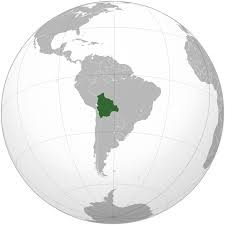
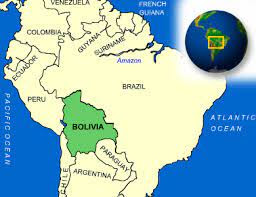
Bolivia is a landlocked nation in South America—in other words, it has no coast on any ocean or sea.


Jamaica, in contrast, is an island nation in the Caribbean Sea. It borders on nothing but ocean!


These two very different nations both celebrate independence today. Bolivia won its independence from Spain on this day in 1825, after 16 years of struggle and war, and was named after one of the military heroes of that fight, Simón Bolívar. 

Jamaica celebrates its independence from the United Kingdom in 1962, although the nation maintains part of the Commonwealth and thus has U.K. Queen Elizabeth II as its ceremonial head of state.

Bolivia has 37 official languages! — Spanish, Quechua, Aymara, and 34 other native languages. More than half of Bolivians are Amerindians (native South Americans) of various background (including Quechua and Aymara), quite different from the ethnic heritage of all other South American nations, which are heavily European/white or mestizo (mixed Amerindian and European).


Jamaica, on the other hand, has only one official language—English—and has a population that is largely of African descent.

Jamaica's Bob Marley and
reggae music are famous worldwide. 


One of the most interesting things about Bolivia, other than its rich mix of Amerindian cultures, is the range of amazing landscapes. There are high Andes mountain-scapes and weird salt-plane- scapes, for example.


Jamaica is beautiful, too, of course!


One interesting thing about Jamaica is that it hosted a bobsled team, even though Jamaica is a tropical island without snowy mountains on which to practice such a sport. The bobsled team competed in the 1988 Winter Olympic Games in Calgary, Canada, and they quickly became crowd favorites as underdogs. Bobsledders from other countries loaned them spare sleds and offered them guidance and support. The Jamaican bobsled team didn't officially finish (let alone win), because they lost control and crashed during one of their four runs. However, they did improve, and they were very fast starters. After crashing, the four bobsledders got out of their sled and walked with it to the finish line. The crowd went wild.

At the 1994 Olympics, the Jamaican bobsled team finished ahead of many other countries, including the U.S., and in 2000 they won the gold medal at the World Push Championships in Monaco.

The Disney movie Cool Runnings is loosely based on the Jamaican bobsled team!


(First Saturday in August)


(First full weekend in August)


February 29 - Knowledge Is Power!

Posted on February 29, 2020


There are so many horrible things done by Christopher Columbus and the other European explorers and conquerors and missionaries - horrible things done TO the native peoples of the Americas....

This little anecdote is an example of Europeans using every technological or other advantage they had to get what they wanted, whatever the cost to the Native Americans / indios.

The scene: On Columbus's fourth (and final) voyage to the Americas, only two of his original four caravel ships were still afloat. They landed in Jamaica in June of 1503. 

And, actually, those two ships were barely afloat: they were infested with shipworms! The Spaniards needed to hole up in Jamaica and wait for a rescue ship to pick them up.


The native Jamaicans were welcoming to Columbus and his crew. They provided them with food and other supplies in exchange for some trinkets the Spaniards had brought. BUT...

...How did the Spaniards repay their welcoming attitude? Did they commit terrible crimes (like murder)? Did they cheat the Jamaicans? Did they steal from the native islanders? 

Actually, Columbus's crew did all of the above. Given the Spaniards' terrible behavior, the native Jamaicans didn't feel so very welcoming anymore. In January of 1504 they stopped trading with the Spaniards.

Columbus was in trouble. He and his crew couldn't leave, because the ships were not seaworthy. They couldn't stay, because they had no source of food. 

But Columbus had an almanac with some astronomical tables. The German astronomer Regiomontanus had predicted that there would be a total lunar eclipse on February 29, 1504.


Columbus called a meeting with the chiefs of the Jamaican peoples a few days before the eclipse. He told them that his god was angry with them because they wouldn't give him the supplies he needed. Because of this anger, he said, his god was going to take away the moon in three days time!

Three days later. 

Nighttime. 

Aaaannnnd - the lunar eclipse began! Soon it looked as if the black night had taken a "bite" out of the bright moon. As you can imagine, the native Jamaicans were astonished and scared. They ran to get some food, brought it to the ship...and they begged Columbus to intercede with his god. 

At this point, the eclipse was total. Actually, the moon wasn't totally gone, but it wasn't bright, but was instead a dark, angry-looking red color. And there was no moonlight reaching the Earth. 

Columbus told the Jamaicans that he would pray on their behalf, within the peace inside his captains quarters. From the information in the almanac, he knew that the total eclipse of the moon would last about 48 minutes, so inside the cabin he flipped over an hour glass. Then he waited until he knew that the moon would soon begin to reappear; he came back to the chiefs and told them that the gods had relented and would bring back the moon.

And, sure enough, the bright, shiny moon did reappear. (Of course!)


This display of supposed godly power over the moon convinced the Jamaicans to continue to supply the Spaniards until a ship finally arrived in June to take Columbus and the crew back to Spain.

This trickery is pretty bad, but of course the terrible treatment of the native Jamaicans was even worse. This anecdote  shows the power of knowledge, and of written language, and of mathematics and science. After all, Columbus's trick wouldn't have been possible without that prediction being written down in an almanac. (Columbus didn't know how to predict a lunar eclipse!) And the trick would have backfired if Regiomontanus's math had been a little off, or if Columbus had tried it with a group of Native Americans who could predict eclipses on their own (like the Mayans). 


Also on this date:


(Last Saturday of February)


Plan ahead:


Check out my Pinterest boards for:


August 1 – Emancipation Day / Caribbean Style

Posted on August 1, 2019

Haiti was the only nation in the world formed as the result of a slave revolt. So we might think of that revolt as the only successful revolt....

BUT actually many Caribbean slave revolts over the course of decades ended up convincing the British government to end slavery in their colonies. 

The Slavery Abolition Act 1833 abolished slavery everywhere in the entire British Empire (I guess the exceptions were the territories "in the possession of the East India Company.") It might seem like the Brits woke up one day and realized that slavery was wrong and voted to change their ways - but British people had been talking about how very immoral slavery was since the late 1700s. It's hard to get people to abolish something that's tied into systems of agriculture and ways of life and economic well-being!

After decades of agitation from the anti-slavery movement and centuries of resistance and violent rebellion from the enslaved people themselves, the British government finally ended the awful practice of buying, selling, and owning human beings. 

The British government's emancipation declaration didn't mention all the revolts and strikes that had disrupted agriculture and caused damage to plantations. The declaration didn't mention the free territories springing up. It certainly didn't mention the general strike led by Sam Sharpe in late 1831. Sharpe was able to get about one-fifth of all of Jamaica's enslaved people to participate in the work stoppage - that's about 60,000 people!!! - and some of the striking slaves used hatchets and torches to lay ruin to 145 plantations. The cost of all that damage was 200,000 British pounds - a hefty sum back then! 


The Slavery Abolition Act took effect in British lands on this date in 1834. Because of that, many nations that were once British colonies celebrate Emancipation Day in early August. Most of these holidays fall on the first Monday in August (you know, so people can have a long weekend); the holiday is sometimes called "August Monday." Bermuda celebrates emancipation on the Thursday before the first Monday in August. (That means that some years it's celebrated in July.) But three English-speaking Caribbean nations celebrate Emancipation Day on the actual anniversary of emancipation:

Trinidada and Tobago
Jamaica
Barbados

Can you sort out which of these nations goes with which map, flag, capital, and landscape?

(1) Maps:
(A)
(B)
(C)

(2) Flags:
(D)
(E)


(F)


(3) Capitals:
(G) Kingston
(H) Port of Spain
(I) Bridgetown

(4) Landscapes:

(J)
(K)
(L)


Answers: 

1) A - Barbados; B - Trinidad and Tobago; C - Jamaica
2) D - Trinidad and Tobago: E - Barbados; F - Jamaica
3) G - Jamaica; H - Trinidad and Tobago; I - Barbados
4) J - Barbados; K - Jamaica; L - Trinidad and Tobago


Also on this date:


Plan ahead:


Check out my Pinterest boards for:

And here are my Pinterest boards for: