
Posted on December 24, 2019
 The holiday of Christmas is religious and secular, Christian and pagan, ancient and modern, heartfelt and commercial, a celebration of giving and charity and a celebration of greed and materialism! Being celebrated so near the shortest day of the year, it's often celebrated with lights - yule logs, candles, and nowadays electric lights!
 |
| Above and below: Christmas lights in New York City |

Naturally, many people in the world do not celebrate Christmas. Even though just about every common custom associated with the holiday comes from pagan, pre-Christian traditions, the holiday IS associated with Christianity, and therefore many Jewish, Muslim, Hindu, Buddhist, atheist, or other non-Christians avoid all things Christmas. On the other hand, because so many people celebrate the holiday in a secular way, it is becoming less entangled with religion (just like Halloween is), and more and more people are participating in traditions that appeal to them.
 Christmas is, in many parts of the worlds, one of the biggest gift-exchanging holidays of the year. (And that makes it, for many retailers, the most important time for sales and promotions.) Of course, the most common way for people to give gifts is to simply sign a card or gift tag and give them in person or to mail them to the recipient. But there are also stories about a variety of magical gift givers, including these:
Goblins called nissar in Denmark


Yule Lads in Iceland

A witch named Befana, on a broomstick, in Italy (gifts given on January 6)

Sinterklaas, on a white horse, in the Netherlands and Belgium

A grandfather named Jultomten and Julnissar elves in Sweden


St. Nicholas, often on a horse, in a variety of European countries (gifts given on December 6)

Christkind, Baby, or Baby Jesus in Germany, Czechia, and other European countries

Père Noël in France

Father Frost and Snow Maiden, on a sleigh, in Russia

Also in Russia, an old woman named Babushka

Joulupukki, or Yule Goat, in Finland

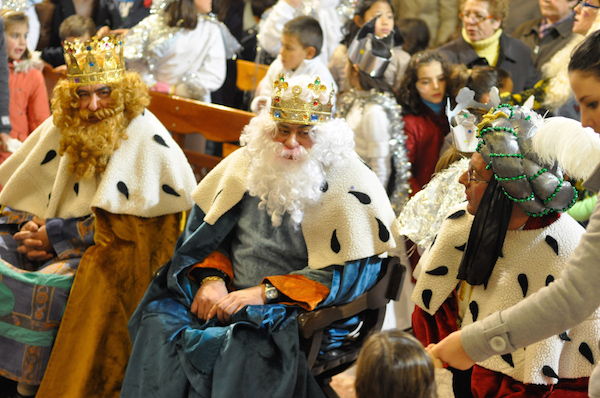
Three Kings (Los Reyes Magos) in Spain (gifts given on January 6)
Father Christmas in the U.K.

Santa Claus in a reindeer-pulled sleigh in the U.S. - and spreading to other nations, particularly English-speaking nations

An old man with a stick, Gwiazdor, in Poland, maybe accompanied by a Snow Maiden

Tió de Nadal - or Christmas Log - in Catalonia

Also on this date:


Yap Constitution Day in Micronesia


Plan ahead:
Check out my Pinterest pages on:
And here are my Pinterest boards for:


