Showing posts with label Day of the Republic. Show all posts

August 2 - Ilinden AND Day of the Republic in North Macedonia

    Posted on August 2, 2022     


This is an update of my post published on August 2, 2011:


On this day in 1903, Macedonians rose up in the Ilinden Uprising
against the harsh rule of the Ottoman Empire. For a while, they were successful, but soon the Ottoman forces crushed the rebellion and took revenge by killing people and destroying thousands of homes.

Ilinden Memorial


And on this day in 1944, the Republic of Macedonia was established. It was part of the communist nation of Yugoslavia.

It wasn't until 1991 that Macedonia was able to establish true independence, as Soviet-backed Yugoslavia broke apart. Independence day on September 8 celebrates this 1991 beginning of the modern Republic of Macedonia; still, August 2 is also celebrated as a patriotic public holiday.

In 2019, a dispute with Greece over the name Macedonia was settled, and the Republic of Macedonia became the Republic of North Macedonia.


Don't you love the flag of North Macedonia?


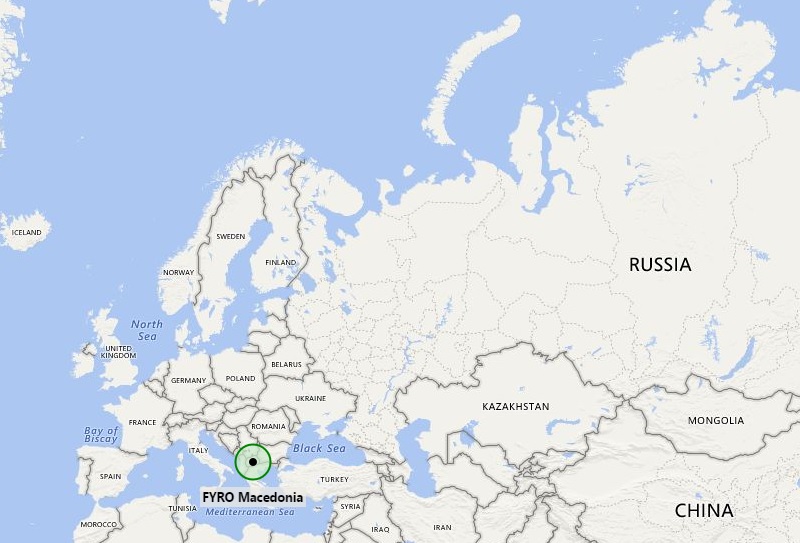
Do you know where North Macedonia is?


North Macedonia is a small landlocked nation on the Balkan peninsula in eastern Europe. Its neighbors include Kosovo, Serbia, Bulgaria, Greece, and Albania.



When was Macedonia powerful?


In ancient times, in the 300s B.C.E., Philip II of Macedon conquered nearby lands and made them a part of his kingdom. His son, Alexander the Great, conquered even more lands and built up the kingdom even larger—as a matter of fact, Macedonia was one of the largest empires of ancient history. Alexander the Great was undefeated in battle and is considered one of the most successful military commanders of ALL time!


Alexander the Great, King of Macedonia
(facial reconstruction)


October 23 – Day of the Republic in Hungary

Posted October 23, 2017

To people in the U.S., our national history is so short, and really pretty simple in some ways. What I mean is that, as much as the nation has changed in 200+ years, since the ratification of the Constitution, the name of the country has stayed the same, the form of government has largely stayed the same, and the nation has remained independent.

Many other countries have a more complex narrative to their national stories. They have much longer histories, in many cases, have often been part of many different empires and nation-states, have fought for and won independence multiple times, have changed forms of government.

In the case of Hungary, the foundation for this nation was laid in the 9th Century. Yes, that's right - the 9th Century, when years still had three digits, like 841 and 889. It had centuries of independence as a kingdom and enjoyed a golden age in the 1400s, but then part of Hungary was occupied and ruled by the Ottoman Empire, and then by the Habsburgs, and then formed a powerful Austro-Hungarian Empire with (you guessed it) Austria.

World War I was devastating. According to Wikipedia, the country lost 71% of its territory and 58% of its population. Hungary was a part of the losing side of World War II, as well, fighting with the Axis powers and suffering a lot of death and destruction. 

This Hungarian flag had the communist
coat of arms cut out.

The flag with the hole in
the center became the symbol
of the Hungarian Revolution.
After WWII, Hungary became a satellite state of the Soviet Union. Hungarians revolted against the U.S.S.R., starting on this date in 1956, and seemed to win. The Soviet-installed government had collapsed, a new government was established, and that new government pledged to hold free elections. Negotiations to withdraw Soviet forces were about to begin -

When suddenly the Soviet government changed its mind - smackdown! - and crushed the revolution. 

This Google doodle from 2010 shows the
Hungarian flag-with-hole...

When the Soviets moved to stamp out the revolution, thousands of Hungarians died, and hundreds of thousands fled as refugees. But even though the Soviet Union "won," and Hungary remained under its power, the Soviet Union lost a lot of legitimacy in the eyes of people all over the world, and it was one reason for the U.S.S.R.'s eventual demise.

When Hungary really, truly did become fully independent again in 1989, it reached back to this 1956 revolution as an important part of its independence, and October 23 became a national holiday!

To celebrate, I am including some beautiful photos of some of the most beautiful spots in Budapest 


Also on this date:

August 2, 2011 - Ilinden AND Day of the Republic

 – Macedonia


On this day in 1903, Macedonians rose up in the Ilinden Uprising against the harsh rule of the Ottoman Empire. For a while, they were successful, but soon the Ottoman forces crushed the rebellion and took revenge by killing people and destroying thousands of homes.

And on this day in 1944, the Republic of Macedonia was established. It was part of the communist nation of Yugoslavia.

It wasn't until 1991 that Macedonia was able to establish true independence, as Soviet-backed Yugoslavia broke apart. Independence day on September 8 celebrates this 1991 beginning of the modern Republic of Macedonia; still, August 2 is also celebrated as a patriotic public holiday.


Do you know where Macedonia is?

Macedonia is a small landlocked nation on the Balkan peninsula in eastern Europe. Its neighbors include Kosovo, Servia, Bulgaria, Greece, and Albania.


When was Macedonia powerful?

In ancient times, in the 300s B.C.E., Philip II of Macedon conquered nearby lands and made them a part of his kingdom. His son, Alexander the Great, conquered even more lands and built up the kingdom even larger—as a matter of fact, Macedonia was one of the largest empires of ancient history. Alexander the Great was undefeated in battle and is considered one of the most successful military commanders of ALL time!