Showing posts with label automobiles. Show all posts

September 14 – A Whole Lotta Holidays!!

(Second Saturday of September)
Posted on September 14, 2019

There are all these national days meant to focus our attention on important issues or the products that advertisers are trying to get us to buy... There are silly "holidays" and food "holidays" and so MANY holidays that, when I checked out holidays for the day, I found a bunch of special days meant to be celebrated on the second Saturday of September:

Banana Festival - Today is a chance for the people of Fulton, Kentucky, and South Fulton, Tennessee, to go bananas! The twin cities focus their concerts, races, and fair-like festivities on bananas because, in the late 1800s, the Illinois Central Gulf Railroad was the first railroad to offer refrigerated cars, and so Chiquita (as it is now named) used that railroad to ship bananas north from New Orleans. It was Fulton that had the only ice house on the route north to Chicago! 


Farmers' Consumer Awareness Day - This worthwhile event, which is located in Washington, connects farmers and consumers as farmers show off farm equipment and give tours of their farms, and consumers get to ask questions about techniques and practices. The emphasis isn't just on growing and harvesting foods, but also how those foods get to the grocery store - the entire story of where our food comes from. 


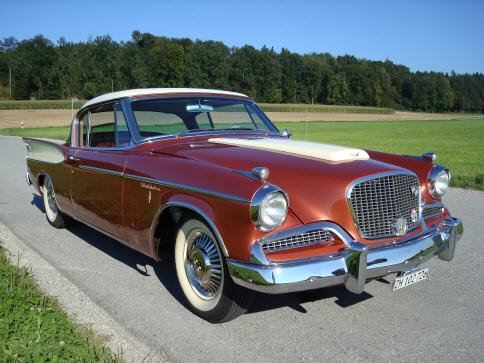
International Drive Your Studebaker Day - The Sudebaker Drivers Club sets up this annual day, but people are urged to have fun driving their Studebakers wherever they are. Of course local chapters of the club can organize to actually get together and host an event.   
National Hollerin' Day - Spivey's Corner, North Carolina, has held an annual hollerin' contest for decades now. Hollerin' may be the earliest sort of communication humans ever used. The contest is for fun but also started as a fundraiser for a volunteer fire department. 
There are four categories of hollers, apparently: communicative hollers, warnings/distress, functional farm/field/work hollers, and hollers for pleasure (these are more like music than the others). Check out more here 


National Iguana Awareness Day - Iguanas are wonderful creatures - large lizards that eat leaves, flowers, and fruit; swim; and live in trees. They're so cool that loads of people want them for pets - BUT! When almost a million iguanas are imported from tropical locales every year for the pet trade, you know you're going to have problems!
Iguanas are not great starter pets - they need special care and can be aggressive. It's hard to get veterinary care for iguanas. Also, people often buy iguanas when they are small and inexpensive - but the lizards can grow to six feet in length! Most pet owners cannot provide the right kind of home for iguanas. 
Many iguanas imported as pets to warm places like Florida are released by unhappy pet owners - or escape - and they tend to wreak havoc on local ecosystems!

Basically, the awareness we should have about iguanas is: it's nice to learn about these marvelous lizards, and to admire them - but we probably shouldn't keep them as pets!


Prairie Day - This family-oriented event occurs in Missouri at the George Washington Carver National Monument. This fun and educational day not only offers insight into the agriculturalist and inventor G. W. Carver, but it's also a celebration of covered-wagon days and pioneers. We're talking horse-drawn wagon rides, quilt shows, demonstrations of everything from banjo building to basket weaving, cider making, and all manner of storytelling, singing and dulcimer playing, and a horse show!


September 23 – Patterson-Greenfield's First Automobile

Posted on September 23, 2016

This photo's caption is wrong and wrong!
I was pretty excited to see the headline “C.R. Patterson, Born Slave, Built Automobiles Before Henry Ford.”

I thought to myself, “Wow, I sure didn't know about THIS!” And I eagerly read to discover how, when, and where Charles Rich Patterson, formerly enslaved person, built motorized cars even before Henry Ford. 

But that very article – the hundreds of words after the headline – contradicted the headline in two ways:

  1. It turns out that it wasn't C.R. (Charles Rich) Patterson who built autos, but his son Fred, who was never enslaved.
  2. The first Patterson-Greenfield auto rolled off the assembly line on this date in 1915, and Henry Ford's Model T made its debut in 1908.

You know what? I think the actual story is super rad. Why-oh-why was there an inaccurate headline that makes the whole article suspect?

Here's the super rad truth:

Shortly before the Civil War, C.R. Patterson escaped from slavery on his own two feet, found his way to Ohio, and got a job working at a carriage company. He used his blacksmithing skills to get the job, but he must have had some leadership skills, too, because he rose up from worker to foreman.

By 1873, Patterson started his own carriage building business along with J.P. Lowe, a white carriage maker.

When Lowe died (a decade later), Patterson found himself sole owner of a carriage company – one of the few black-owned businesses in transportation. He built 28 different horse-drawn vehicles – everything from surreys and phaetons to doctor's buggies.

Patterson's two sons could at that point help out with the work, so the company became C.R. Patterson and Son Carriage Company. Sam ended up being the “Son” in the title; Fred became the first black person to graduate from Greenfield's high school and then the first black football player at Ohio State and then a history teacher in Kentucky.

But Sam died in 1889, and C.R. became sick the following decade. So Fred rejoined his father's company and began to take more and more leadership.

One thing he noticed at the turn of the century (the early 1900s) was that horse-drawn carriages and buggies were a dying industry as more and more people began to use automobiles and other self-powered vehicles. It was Fred that began tinkering with motor-driven vehicles. C.R. died in 1910, and not too long after that Fred began to test his first designs, a Greenfield touring car and a roadster.

It was Fred Patterson who became the first African American to own an auto company.

Fred Patterson, son of a former slave, who began
manufacturing cars a bit after Ford started doing so.

It was difficult for Patterson's designs to compete with Henry Ford's Model T – whether because Ford had a head start, because he was white and could more easily getting funding, or a combination of the two. Fred Patterson decided not to go head-to-head with Ford, and he began building bodies for trucks and buses set upon a chassis made by Ford or GM. By 1920 he had changed the name of the company to Greenfield Bus Body Company. He nurtured the relationships with many different school districts and, until the Crash and the Great Depression, he had a steady income from returning customers who wanted more and more buses.

I checked these details with multiple sources, and this account seems to be true (although some of the dates and details are a sort of best-guess history). Like I said at the beginning, this doesn't match up with Ex-Slave Beat Ford in Building Early Autos – but the true story is really wonderful!


Also on this date:


Plan ahead:

Check out my Pinterest boards for:
And here are my Pinterest boards for:


June 1 – Happy Birthday to the Steamy Stanley Twins

Posted on June 1, 2014

In the 1800s there were lots of people living in cities, and lots of those people had carriages of various types and sizes drawn by horses. I sometimes try to imagine what busy city streets would've been like back then!


There would have been a lot of horse poop, I bet!

When the auto-mobile – named because it could propel itself and didn't have to be pulled by a horse – was first invented, there were several types of engines. One of the biggies was the steam engine, and of course there was also the internal-compulsion engine run by gasoline.

Today's birthday twins designed, manufactured, and sold steam-engine autos. Because their names were Edgar and Freelan Stanley, their cars were called Stanley Steamers.

The Stanley brothers produced their first car in 1897, and in the next few years they were the leading manufacturer of cars in the U.S. Here you see Freelan Stanley and his wife at the top of Mount Washington in New Hampshire, the highest peak in the northeastern U.S. – they took the two hours to drive up to the top as a publicity stunt for their auto business.

The Stanleys sold this original auto design to Locomobile and did a complete re-design for their own new business, the Stanley Motor Carriage Company. Their new design was twin cylinder engines geared to the axle for the back wheels. With this design, they needed no transmission, no clutch, no driveshaft....But they did need some gasoline, apparently, to run the vaporizing gasoline burner underneath the boilers.

By the way, there were safety valves, and even modern engineers agree that the steam-boilers were safer than we might imagine. No Stanley boiler ever exploded in use!

The Stanley Steamer used to race cars with early internal-combustion engines—and the steam-powered cars won! In fact, one world record stood for five years, despite the rapid development of better and better cars that was occurring in the industry.

You may wonder why the internal-combustion engine ended up winning out over the steam engine cars. In the decade of the 1910s, the internal-combustion engines improved their efficiency and power greatly. Also, the electric starter was invented, and it made gasoline-powered cars much safer than they had been when they were started by hand-cranking. Finally, Henry Ford's innovative production style with the assembly line drastically reduced the cost of his internal-combustion cars.

Learn more about cars – and the history of cars – here and here


Also on this date:


Gawai Dayak in Malaysia 


Plan ahead:

Check out my Pinterest boards for:
And here are my Pinterest boards for:


August 17, 2011 - Happy Birthday, Ralph Teetor


Did you know that the guy who invented cruise control, which allows automobile drivers to automatically keep their cars moving at a constant speed, was blind?

That's right! The amazing Ralph Teetor, who was born on this day in 1890 and who was blinded in an accident at age 5, became a prolific inventor. (That means that he invented a lot of things.)

Teetor became an engineer and invented a power lawn mower, special locks, holders for fishing rods, and other gadgets. He developed a technique for balancing steam turbine rotors used in torpedo-boat destroyers. He was a long-time executive of a manufacturer of piston rings. He was very successful and has been inducted into the Automobile Hall of Fame.

June 4, 2010

Henry Ford's First Test Drive – 1896

One this day in 1896, Henry Ford put the finishing touches on his first vehicle.

This self-propelled vehicle ran on a gasoline-powered engine. 


Sitting on four bicycle tires, it didn't look much like modern automobiles, but of course it was their direct ancestor.

Ford called this first vehicle a quadricycle. It was also called a horseless carriage and a gasoline buggy.

On th
at day in 1896, Ford started up his quadricycle and drove it around the streets of Detroit, Michigan. Naturally, it attracted stares and questions from onlookers. I wonder if it seemed very low to the ground next to the people on horseback and horse-drawn carriages?

The quadricycle only had two gears—and no reverse! It reached speeds of 20 miles per hour.


Later in 1896, Ford sold this first quadricycle for $200. He built two more in the next three years, and of course went on to make better and better cars, including his famous Model T (pictured here, right). Eventually, he bought back his first quadricycle for $65. It is now on display in the Henry Ford Museum in Dearborn, Michigan.
Design a vehicle or transport system of the future.

Think about the stuff you've seen in science fiction movies. Are those vehicles possible? Practical? Desirable?


Do you have any completely original ideas?


Remember, most invention is really REinvention.


Take some vehicle that works and re-design it so that it's better: cheaper, faster, smaller, larger, “greener” (by which I mean better for the environment), or ...


Find Out More

  • Read a short bio of Henry Ford. Notice, at the bottom of the page is a slideshow and puzzles.