March 28 - Ragnar Lodbrok Day in Scandinavia

  Posted on March 28, 2022

This is an update of my post published on March 28, 2011:


On this day wayyyyy back in 845 A.D., Viking raiders under the leadership of Ragnar Lodbrok are said to have sacked Paris. This means that (according to Norse stories) they stole all the valuables they could find.

In other words, the Vikings looted. They pillaged. They plundered. They robbed and stole and took booty.

Paris was ruled at the time by Charles II “The Bald,” and Norse stories say that Charles The Bald paid Ragnar lots of money to just take the spoils and leave, rather than destroying the city—7,000 pounds of silver to go along with all the rest of the loot, just so the raiders wouldn't burn everything down!

The stories go on to say that Ragnar did leave Paris, but he continued to attack France all the way up the coast.
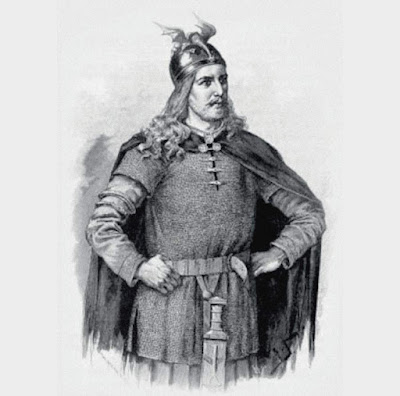
By the way, Ragnar was nicknamed “Hairy Breeks” (or “Hairy Breeches”) because he is said to have wooed his second wife by wearing thick, hairy leather pants in order to protect himself as he killed poisonous snakes that were infesting part of Sweden. Ironically, he's said to have eventually died because of snakes: when he went to Britain to pillage and loot, the Northumbrian king captured him and put him to death by throwing him into a pit of venomous snakes.

Much of what we “know” about Ragnar and the sacking of Paris and all the snakes comes from Old Norse poetry and legendary sagas. In other words, we only know what this Viking did from Viking poems and tales. Naturally, the sagas made Ragnar sound better than he really was—stronger, more daring, more clever. 

But he just sounds like a bully and a thief, to me!
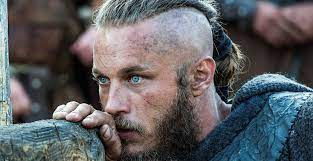

Ragnar has become a character in movies and video games.
Like Robin Hood and King Arthur, Ragnar may have been
based on a historical figure - but surely not all the stories
told about him are true!

Keep in mind that some Frankish (French) stories say that the French troops defeated Ragnar when he tried to attack Paris. And there isn't an awful lot of evidence that Ragnar even existed, let alone that he sacked Paris.  


Explore the Viking Age

Were Vikings always bullying others and stealing booty? Not all of them, for sure, and not all of the time, even for those who were big meanies. Check out the Vikings for Kids video.

Here is a modern tale about Vikings - a story meant for little kids!

Did you know that Vikings never wore horned helmets?


The typical Viking horned helmet...is a myth!


Two famous helmets that were found in Denmark - helmets with metal horns of a different shape than the usual animal horns we see in Viking shows and images - date back to WAYYY before the Vikings lived.


This horned helmet dates back 2,000 years before
the Vikings!

The evidence tells us that the helmets Vikings wore didn't feature horns. Apparently costume designers and/or illustrators in the 1800s came up with the ubiquitous but incorrect horned Viking helmet!
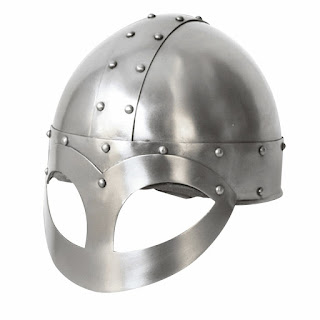
This is a modern version of a more
authentic Viking helmet design.


March 27 - Plant-Cells Day!

 Posted on March 27, 2022

This is an update of my post published on March 27, 2011:


On this day in 1776, Charles-François Brisseau de Mirbel was born in France, and on this same day in 1817, Carl von Nägeli was born in Switzerland.

Above, Mirbel. Below, Nägeli


They both grew up to be scientists who study plants (who are called botanists), and they both added to our knowledge of cell biology (which is called cytology).


Mirbel is actually considered a founder of the study of plant cells. He observed that each plant cell has a continuous membrane. Von Nägeli studied cell division and pollen formation, and he may have been the first to describe chromosomes (which he referred to as “transitory cytoblasts”).

Cell division


By the way, von Nägeli was a bit of a mystic who, some science historians say, did a lot of harm by dismissing Gregor Mendel's work on genetics—even going so far as to discourage Mendel from experimenting further in the area. Not cool, von Nägeli! Not. Cool!


Learn about plant cells!

Plant cells, just like all other cells, have many parts. Check out the cell parts at the Cells Alive website: move the mouse over the interactive diagram to see the various names for cell parts, and click one of the organelles (or its label) to find out more about that part.

Do some puzzles with a cell theme. 

You can make an incredible edible cell with instructions found here. Or an edible cell-in-a-baggie; again, instructions found here.


Find more cell-model websites here.


Plan ahead:


Check out my Pinterest boards for:
And here are my Pinterest boards for:


March 26 - Earth Hour Tonight AND Celebrating Conrad Gesner

    Posted on March 26, 2022  


This is an update of my post published on March 26, 2011:


At 8:30 p.m., millions of people in thousands of towns and cities around the world will ignite some candles and shut off the lights for one hour.


Check out this environmental event here. 


Also...

Happy Birthday, Conrad Gesner

Before there was Wikipedia, there were encyclopedias—printed books, multi-volume works that organize knowledge in alphabetical order. An early encyclopedist named Conrad Gesner was born in Switzerland on this day in 1516.

Gesner set out to collect all the world's recorded knowledge, and he presented this knowledge with elaborate illustrations. In addition to general encyclopedias, Gesner tried to connect ancient knowledge about animals with then-modern science, plus his own observations of animals, in a 5-volume natural history encyclopedia of animals. This was his most widely-read encyclopedia, and it was also the most widely-read of all natural histories of his time—so it is considered his magnum opus (masterpiece, or great work).


Encyclopedias and Wikipedia

Encyclopedias are generally created by editors who have experts in each field write entries about that field. The experts are paid for their writing, and the editors are paid to edit and smooth out the writing. These editors care about the accuracy of the finished, published encyclopedia because they care about its reputation.


In contrast, Wikipedia is written by anybody who wants to contribute—and these volunteers do not get paid for their writing. It is edited by whoever wants to make a change, for whatever reason—and sometimes that means vandals who put up mis-information, funny stuff, or outright lies. Dedicated contributors watch for vandalism, and much of the deliberate misinformation is taken down immediately—but some errors do of course slip through and may linger for months before they are caught and removed.

(But some errors slip through to print in the case of encyclopedias, as well. And these errors are not so easy to correct once they are printed and distributed around in libraries!)

Wikipedia has information on far more topics than do encyclopedias—including “fun” (some would say unimportant) topics, local topics, and very current topics. A local Hindu shrine, my friend's son's rock band, and the recent Winter Olympics are all covered by informative articles on Wikipedia, for example...try finding that stuff in Encyclopedia Britannica! As for fun stuff, I bet most encyclopedias don't have articles on pirates vs. ninjas, "baby Yoda" (aka Grogu), and Wordle! But Wikipedia does.


If you want to know how reliable Wikipedia is...consult Wikipedia! 

This article explains how bad “info” is cleaned up from Wikipedia. 

Here and here are other article about the reliability of Wikipedia—from sources independent of Wikipedia. (They basically agree with Wikipedia.)

No matter what source you consult, remember—take things with a grain of salt, don't believe everything you hear or read, and check multiple sources!