Showing posts with label Oceania. Show all posts

August 4 - Constitution Day on Cook Islands

 Posted on August 4, 2022        


This is an update of my post published on August 4, 2011:


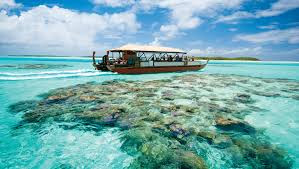
The fifteen Cook Islands, land-wise, added all together, are only about as large as a medium-sized city such as Orlando, Florida; Sacramento, California; or Knoxville, Tennessee.


But the zone of the Pacific Ocean in which the islands lie, called the Cook Islands Exclusive Economic Zone, are almost seven hundred thousand square miles (1,800,000 square km)!

The islands have a close relationship with New Zealand, use New Zealand currency, and count Great Britain's Queen Elizabeth II as the ceremonial head of state. The Cook Islanders are largely Maori, a group of Polynesian people who are considered the native people of New Zealand.


Check out the Cook Islands on this 4-minute video


January 30 - World's Tallest Geyser Discovered

     Posted on January 30, 2022


This is an update of my post published on January 30, 2011:


Just in the nick of time, on this date in 1901, Dr. Humphrey Haines discovered the world's tallest and most powerful geyser. Called Waimangu Geyser, it was located on the North Island of New Zealand. Every 36 hours, this geyser hurled up water, black mud, and rocks as high as 600 to 1,500 feet into the air. This is between 5 to 10 times the height of the world-famous Old Faithful geyser at Yellowstone!

It's higher than the Empire State Building!


Why did I say “just in the nick of time”? Well, this geyser went extinct in 1904 when a landslide changed the local water table.

People worldwide were interested in the find, and many tourists visited the geyser in the three years between discovery and extinction. Three of the tourists disregarded the repeated warnings of their guide to keep back at a safe distance, and unfortunately all four of them (even the guide) died in a sudden, violent eruption.


New Zealand is shown here in red. It's east of Australia -
so it's on the way-far-right side of this map.

The Youngest Country on Earth

New Zealand calls itself the youngest country on earth because it was the last major landmass to be discovered and settled by humans. About 1,000 years ago, Polynesian people arrived by canoes. By 1250 A.D. (or C.E.), during a period known as the Middle Ages in Europe, and almost a half century after the Magna Carta was signed in England, these Polynesians had made permanent settlements on New Zealand.

Just a few hundred years later, European explorers reached New Zealand.

Unfortunately, New Zealand is left off world maps surprisingly often!


Learn more about New Zealand and the Maori.

(The Maori are New Zealand's indigenous people.)


Here is a book on Maori art. And here is a lesson on making Maori Koru art.


Koru art is inspired by the natural shapes
made by uncurling fern fronds.


Above, Sound of the Universe, by Sofia Minson
Below, A Bird on the Wall, by Sofia Minson
Can you see how the patterns and designs echo
the shape of uncurling fern fronds?


Sofia Minson is part Maori (Ngati Porou).


Here is a video advertising New Zealand as a great place to visit. And it is! I was in N.Z., enjoying the amazing scenery and the Maori art and even the geysers - but then the pandemic struck, and I had to scuttle back home. We missed the last four or five days of sightseeing! Hmmm...maybe I can go back?


July 24 - Children's Day – Vanuatu

 Posted on July 24, 2021


This is an update of my post published on July 24, 2010:


Vanuatu is an island nation in the South Pacific, lying between Australia and Fiji. It isn't just one island, but rather an archipelago of 83 islands and islets.


Today the people of Vanuatu celebrate Children's Day, which has two primary themes: “Stop violence against children” and “Give a child the chance to express an opinion today.” In the morning marches are held, followed by speeches, a dance, and other activities at schools.


Kids get the afternoon off from school and are expected to have fun with their families. Some children receive presents from their parents, but folks often remind parents that it doesn't matter if they can't afford to buy their kids presents―that the day is aimed at encouraging parents and kids to spend time together.


How'd they get there?

People have settled the various islands of Vanuatu for at least 4,000 years, undoubtedly arriving by boat. However, there are a limited number of plant and animal species on the islands. This is most likely explained by the fact that the islands are quite new, geologically speaking. There are no large mammals native to the island, although people have brought the usual critters with them (such as hogs, dogs, and cattle).


The most common indigenous mammals seem to be bats and rats. There's not much mystery about how they got to the islands: the bats flew, like the many bird and insect species, and the rats were probably stowaways on people's dugouts and boats.


The Vanuatuan animals that are very common are fish, corals, and more than 4,000 species of mollusks. Mollusks are land or water creatures that create protective “homes” of one or two shells, plus squids and octopi. Some examples are snails, clams, conchs, and oysters.


Some of these creatures, including cone shells and stonefish, are fatally poisonous.


Did you know?

One tourist attraction off the shore of Vanuatu is a sunken luxury liner similar to the Titanic. Instead of being sunk super deep down in cold water, however, this luxury liner rests on a shallow sea floor in clear, dive-able water.


Vanuatu boasts a banyan tree as large as a soccer field!


Vanuatu also boasts the world's most active volcano: Mount Yasur has been erupting continuously for MORE THAN A CENTURY!!


Yasur has been active and erupting consistently since at least 1774 - but probably centuries before that - and has been been considered erupting continuously for 120 years. 

Since the lava tends to be less thick-and-sticky than in some active volcanoes, it is a bit less dangerous - and that's why many people have gone to Vanuatu to peer into the crater and watch the lava with a lot less difficulty and danger than one would imagine. HOWEVER - and that's a big however! - all volcanoes are dangerous, and there are very definitely unsafe places, actions, and times with Mount Yasur!!!


Also on this date: