Showing posts with label tartan. Show all posts

April 6 - National Tartan Day in the U.S.A.

 Posted on April 6, 2022

This is an update of my post published on April 6, 2011:


Today is a day to honor your Scottish ancestors—if you've got 'em!

Why April 6? The date goes back a loooong time, to April 6, 1320, when the “Scottish Declaration of Independence” was signed by Scottish nobility in Arbroath Abbey.


Why “tartan”? Tartan is a plaid pattern of criss-crossing horizontal and vertical stripes in various colors. Scottish kilts almost always have a tartan pattern. The pattern is not called “plaid” in Scotland; a plaid is a tartan cloth worn slung over the shoulder, or a tartan blanket. 

Different tartan patterns, with distinctive colors, used to be associated with the region of Scotland in which it was made, but since the mid-1800s, the different tartans came to be associated with different clans (families).


Wallace


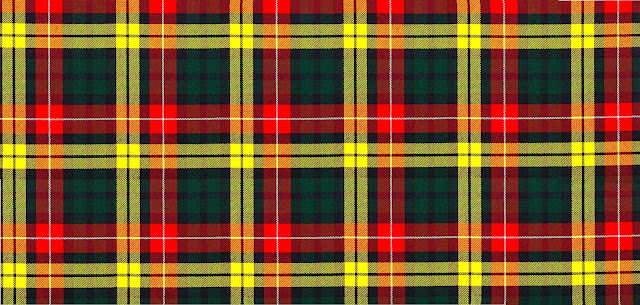
Buchanan


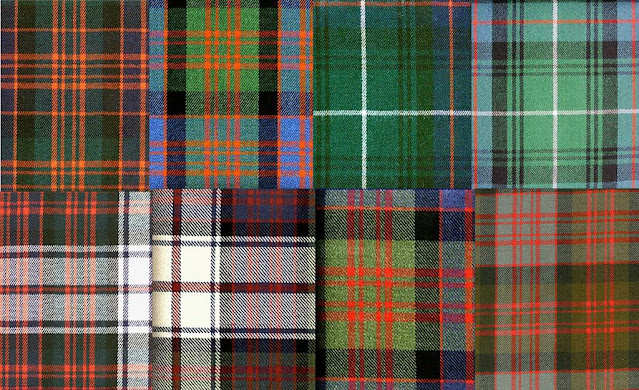
There are a variety of tartans associated with some families.
Here are 8 different tartans for the MacDonalds!

Find out more about Tartan Day here.

Try making your own tartan.

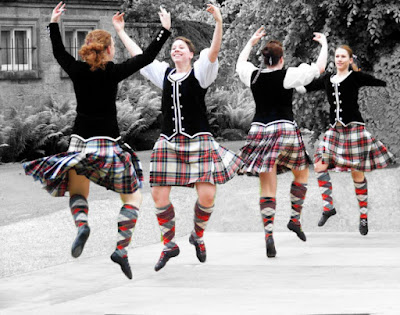
Some celebrations of Tartan Day might include playing bagpipes, doing Scottish dances, holding parades, or putting on Scottish games. Have fun!



January 25 - Burns Night in Scotland

 Posted on January 25, 2021


Today is the birthday of the poet Robert Burns, and many people in Scotland and around the world will be holding a Burns Supper to celebrate his life and works.


(Actually, a Burns Supper can be held on the anniversary of the poet's death, July 21, or any time during the year. This is the most popular date for the event, however.)


Robert Burns lived from 1759 to 1796. Considered the national poet of Scotland, Burns wrote in the Scots language and in English. Some of his most famous pieces are “Auld Lang Syne” (sung by many worldwide on New Year's Eve), “A Red, Red Rose,” and “Tam o' Shanter.”

There is a standard format for a Burns supper:

  • Guests gather and mix informally.
  • The host gives a welcoming speech, and the event is declared “open.” Then the guests sit and a special grace (originally delivered by Burns) is said:
Some hae meat and canna eat,
And some wad eat that want it;
But we hae meat, and we can eat,
Sae let the Lord be thankit.
  • The soup course is served: Scotch broth, potato soup, or Cock-a-Leekie.
  • Everyone stands as the main course, a haggis, is brought in to the accompaniment of bagpipes.


  • The host or another recites Burns' poem “Address to a Haggis.”
It starts like this (with sonsie meaning jolly or cheerful):

Fair fa' your honest, sonsie face,
Great chieftain o' the puddin-race!
You know what a haggis is, right? It is a sheep's heart, liver, and lungs minced up with onion, oatmeal, suet, and spices and simmered in broth in the sheep's stomach for three hours. It's supposed to be really delicious...
(I'm not positive that I buy that, though...)
  • After the poem is recited, the haggis is toasted and everyone sits down and eats. Additions to the haggis (the dark stuff pictured here) on the traditional Burns Supper menu are tatties (mashed potatoes, appearing their normal cream color here), mashed neeps (rutabagas, appearing yellow or pale orange here), and dessert.


  • After supper, people give speeches and toasts. First, everyone toasts the Queen, then guests remember Burns' life or poetry with either humorous or super-serious speeches, and everyone toasts Burns. Next there is often a short speech and toast “to the Lassies”—in other words, to women, followed by a Toast to the Laddies (AKA men).
  • Guests often sing songs written by Burns—or are entertained by singers hired for the event. There is often dancing.


  • Closing; the host calls on guests to “give the vote of thanks,” stand, join hands, and sing “Auld Lang Syne.”
Read some of Burns' works, available under “Poems and Songs” here.

Notice that Scots words you may not know are hyperlinked to translations in several languages...Also, there are LOTS of other things to read at that website!

Find a family tartan (or plaid pattern), or explore the many established tartans here. Or you can design your own tartan!


Recipes and printables (coloring pages and puzzles) are available here. More Burns Night for kids stuff is available here.


April 6, 2011


National Tartan Day – U.S.


Today is a day to honor your Scottish ancestors—if you've got 'em!

Why April 6? The date goes back a loooong time, to April 6, 1320, when the “Scottish Declaration of Independence” was signed by Scottish nobility in Arbroath Abbey.

Why “tartan”? Tartan is a plaid pattern of criss-crossing horizontal and vertical stripes in various colors. Scottish kilts almost always have a tartan pattern. The pattern is not called “plaid” in Scotland; a plaid is a tartan cloth worn slung over the shoulder, or a tartan blanket. Different tartan patterns, with distinctive colors, used to be associated with the region of Scotland in which it was made, but since the mid-1800s, the different tartans came to be associated with different clans (families).

Find out more about Tartan Day here.


Find out more about tartans here.


Try making your own tartan, or perhaps a Scottish stick puppet.