Showing posts with label school. Show all posts

December 2 – Special Education Day

Posted on December 2, 2018

There is a problem with ignoring individual needs and just teaching to one bland medium-everything standard. This kid over here can't see the white board and misses most of the explanation of a math concept. That kid over there can't learn while trying to sit still. And this kid has processing speed issues that result in her not being able to demonstrate what she knows on a timed test.

And - and - and - I could go on.

I've been a teacher, and I certainly understand how difficult it is to work with 30 to 40 kids, each with her or his own issues and needs. 

On the other hand, if we just teach to the few medium-everything students, there are a WHOLE lot of children being left behind!

On behalf of children with disabilities, and those with special needs, the Individuals with Disabilities Education Act was signed into law on this date in 1975. Of course, no law can single-handedly fix every education problem, but this law made it a lot easier for parents and students to agitate for free and appropriate public education. Here is a list of internet resources for students with disabilities.

Remember, ALL kids are special - we are ALL special - and we do not want to make the word "special" into a sneering synonym for "disabled." 

Also, disabilities are challenges and differences that people may have - but they do not define them. People are complicated, with different personalities and interests and talents. There should be no tolerance for bullying or teasing about abilities and needs. If you see someone bullying or teasing, step in, protect the victim, report the bully, stand up to meanness. Here are some anti-bullying resources.


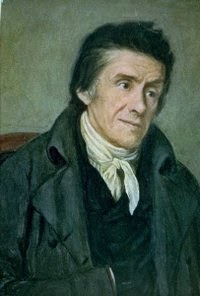
January 12 – Happy Birthday, Johann Heinrich Pestalozzi

Posted on January 12, 2014

Learning by head, hand, and heart.”


 This was the motto of Johann Heinrich Pestalozzi, who worked in and created schools in Switzerland. He believed that education should be child-centered. He believed in educating the whole child—and he instituted physical education so that kids could play games and sports in school, so that they could use their bodies as well as their minds. He believed in teachers being kind and understanding with their students rather than strict and authoritarian.

Young Einstein
Have you heard that Albert Einstein, one of the most respected geniuses of all time, disliked school and did poorly there? Well, Einstein did not like being told what to do all the time, and he did not like being told what to learn, when, how, and where. 
Einstein did a lot of what most people would think of as school-type “work” at home, following his own interests—he loved to read about science, solved algebra problems at home for fun, taught himself Euclidean geometry, and so on. But when teachers made assignments of schoolwork, Einstein found that he didn't want to study that particular thing just at that moment.
Einstein had left school at age 15, but he ended up failing an exam to go to a Polytechnic Institute (a sort of technical college). So he went to a secondary school (a sort of high school) in Aarau, Switzerland. And this school used Pestalozzi's methods. Einstein later wrote that “it made me clearly realize how superior an education based on free action and personal responsibility is to one relying on outward authority.” Pestalozzi's school has been credited with fostering Einstein's visualization of problems and his “thought experiments.”
The familiar Einstein is a bit older.
After graduating from the Aarau school at age 17, Einstein enrolled in the Polytechnic Institute. Again, he was in a school with a top-down model – teachers gave lectures and made assignments, and judged how well students achieved predetermined ends. Once again, Einstein didn't like that sort of education, although he managed to earn a degree. We can all feel really lucky that Einstein did NOT learn just to sit around and learn what other people have said and done and thought—he thought new, revolutionary things!
J. H. Pestalozzi was born
on this date in 1746.
And perhaps he did so partly because today's birthday boy, Johann Pestalozzi, dared to think revolutionary thoughts about education!


Also on this date:


Plan ahead!
Check out my Pinterest boards for:

And here are my boards for:

October 11 – Happy Birthday, Salman Khan

Posted on October 11, 2013

(And happy birthday to me, too!)

Several people have made
"Star Trek" references,
talking about "The Math of Khan."
It is interesting to me that, nowadays, some of the most important and influential educators in the world are men who did not study education in college, who did not start their careers as teachers, who kind of backed into education through a side door.

I am talking about physicist and computer network specialist Sugata Mitra, who is more widely known for his work in education and cognitive science, and former hedge fund analyst Salman Khan, who studied math, electrical engineering, and computer science, but who is famous for his work in creating education videos. Today's birthday boy is also the founder of Khan Academy.

Khan is a nice guy who was willing to help his younger cousins with their math homework. He was doing his tutoring long-distance, using Yahoo's Doodle notepad. But then other relatives and friends asked for tutoring, too—and Khan realized that it would be better for him to upload YouTube videos so that multiple people could see his presentations, but he only had to do each explanation one time!


This time-saving idea ended up creating a whole other career for Khan. His short videos on topics such as exponents and linear equations ended up getting so many hits, Khan became the Number 1 provider of free course material on YouTube! Khan quit his job in finance and concentrated on making videos, and for a while he accepted advertising on his website so that he could keep all the learning videos free. His “academy” got so popular, some wealthy people heard about Khan and decided to make some hefty donations. Khan was able to remove the ads, hire helpers, and make his free online tutoring service into a kind of free, online school that offers thousands of micro-lectures on a wide range of topics. The lessons are even available in at least 28 different languages!

Cosmology? Got it!
Micro-economics? Got it?
Math in Urdu? Got it! In Turkish or Xhosa? 
Got 'em both!
Art history in Norwegian? Got that, too!

Badges? We can earn badges?

One of my daughters dearly loved earning Girl Scout badges (and she earned every single badge and sign it was possible to earn as a Junior Scout!). My guess is that a lot of other kids love earning badges, too, because the Khan Academy decided to create a system of badges that can be earned.

Check out the Khan Academy. I have to tell you, I personally prefer learning in other ways—from reading books, for example, or from watching fascinating and beautiful videos (rather than these plain, practical videos)—and I know that many other people also wonder what all the fuss is about, once they see their first Khan video. However, a great many people, including many kids, love Khan's stripped-down, relaxed teaching style, and they love being able to learn what they want to learn, when they want to learn it, using the Khan Academy. I would think it would be more important to be able to ask questions during an explanation, but many people hate asking questions and love being able to control the speed and repetition of the explanation.


Also on this date:


Plan Ahead:


Check out my Pinterest boards for:
And here are my Pinterest boards for:

April 21, 2012 - Kindergarten Day


Kindergarten was invented to be an interesting, playful, child-centered pre-school for kids.

The inventor, Friedrich Froebel (born in Germany on this day in 1782) thought that kids could learn all sorts of thing through song and play—which were previously unheard of in school—and through art and interaction with the natural world. That “natural world” part explains why many kindergartens (which means “children's gardens” in German) had actual gardens attached to them, which kids tended. Froebel thought that, while kids were cultivating the garden, they would cultivate their own inner lives, too.

Froebel said that all topics (or school “subjects”) were interconnected.

He said that children were innately curious and interested in learning new things.

And Froebel was right about all of these ideas.

But being right doesn't always guarantee success.

Froebel started the first kindergarten in 1837 and sold stock in the enterprise. Although the kindergarten idea spread throughout Germany, he never got rich from his idea. The autocratic Prussian government was against Froebel's kindergartens—they promoted democracy, and we can't have that!—and eventually, in 1851, kindergartens were outlawed in Prussia.

Froebel died a year after that...some say of a broken heart. However, his legacy lives on in the word he invented and also in the ideas he promoted. There are many kindergartens in Germany named for Froebel, and in the Netherlands, froebelen means to be busy with arts and crafts.

By the way, I've noticed that many modern kindergartens (a word used here in the U.S. for the grade immediately before first grade, mostly for children age 5) are much more book-paper-pencil oriented, rather than centered on play and song, paintbrush and outdoors. That's a darn shame, because the play-and-activity center idea that Froebel put forth is much more what kids need!


Also on this date: